

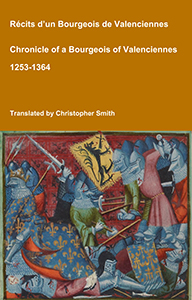
Chronicle of a Bourgeois of Valenciennes
Récits d’un bourgeois de Valenciennes aka The Chronicle of a Bourgeois of Valenciennes is a vivid 14th-century vernacular chronicle written by an anonymous urban chronicler from Valenciennes in the County of Hainaut. It survives in a manuscript that describes local and regional history from about 1253 to 1366, blending chronology, narrative episodes, and eyewitness-style accounts of political, military, and social events in medieval France, Flanders, and the Low Countries. The work begins with a chronological framework of events affecting Valenciennes and its region under rulers such as King Philip VI of France and the shifting allegiances of local nobility. It includes accounts of conflicts, sieges, diplomatic manoeuvres, and the impact of broader struggles like the Hundred Years’ War on urban life in Hainaut. Written from the perspective of a burgher (bourgeois) rather than a monastery or royal court, the chronicle offers a rare lay viewpoint on high politics and warfare, reflecting how merchants, townspeople, and civic institutions experienced the turbulence of the 13th and 14th centuries. Its narrative style combines straightforward reporting of events with moral and civic observations, making it a valuable source for readers interested in medieval urban society, regional politics, and the lived experience of war and governance in pre-modern Europe.
Available at Amazon in eBook and Paperback format.
Executed is in Executions.
1437 Assassination of King James I of Scotland
1462 Vere Plot to Murder Edward IV
24th July 1469 Battle of Edgecote Moor aka Danes Moor aka Banbury
1469 Murder of Humphrey Stafford, Earl of Devon
4th May 1471 Battle of Tewkesbury
1486 Stafford and Lovell Rebellion
1499 Execution of Ralph Wulford
1499 Trial and Execution of Perkin Warbreck and Edward Earl of Warwick
1537 Execution of the Fitzgeralds
27 May 1541 Execution of Margaret Pole
28 June 1541 Execution of Leonard Grey

In 29BC Mariamne the Hasmonean 29BC was executed on the orders of her husband Herod The Great 72BC 4BC [aged 43].
In 304 Aaron Martyr was executed.
In 304 Julian Martyr was executed.
In 792 Osred King of Northumbria was executed.
In 844 Bernard Poitiers Duke Septimania [aged 49] was executed.
In 853 Gauzbert Rorgonide I Count Maine was executed.
In 891 al Mutarrif Umayyad was executed.
In 921 al Asi Umayyad was executed.
In 941 Órlaith íngen Cennétig Queen Consort Ireland was executed apparently as a consequence of her having a relationshoip with her stepson Óengus mac Donnchad Donn.
On 19th April 1012 Archbishop Ælfheah [aged 59] was executed.
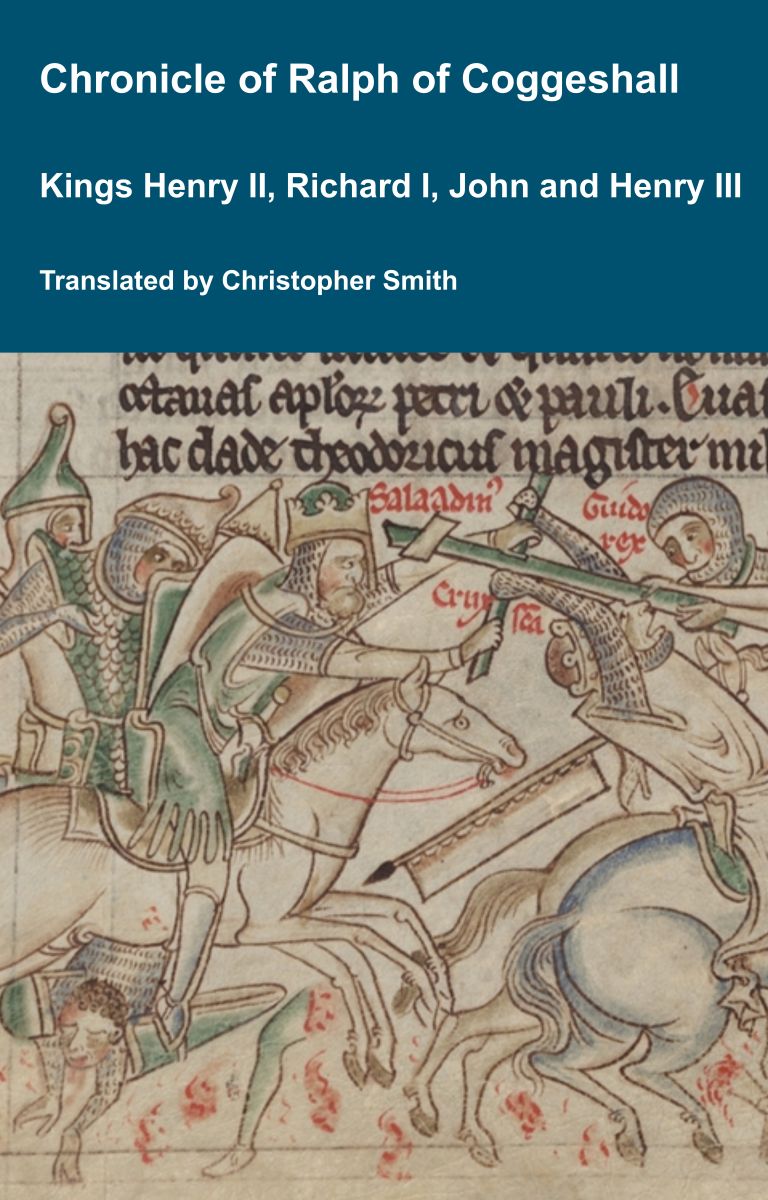
Chronicle of Abbot Ralph of Coggeshall
The Chronicle of Abbot Ralph of Coggeshall (Chronicon Anglicanum) is an indispensable medieval history that brings to life centuries of English and European affairs through the eyes of a learned Cistercian monk. Ralph of Coggeshall, abbot of the Abbey of Coggeshall in Essex in the early 13th century, continued and expanded his community’s chronicle, documenting events from the Norman Conquest of 1066 into the tumultuous reign of King Henry III. Blending eyewitness testimony, careful compilation, and the monastic commitment to record-keeping, this chronicle offers a rare narrative of political intrigue, royal power struggles, and social upheaval in England and beyond. Ralph’s work captures the reigns of pivotal figures such as Richard I and King John, providing invaluable insights into their characters, decisions, and the forces that shaped medieval rule. More than a simple annal, Chronicon Anglicanum conveys the texture of medieval life and governance, making it a rich source for scholars and readers fascinated by English history, monastic authorship, and the shaping of the medieval world.
Available at Amazon in eBook and Paperback format.
In 1017 Eadwig Ætheling Wessex [aged 26] was executed by King Cnut of England [aged 22]. He was buried at Tavistock Abbey, Devon [Map].
In 1214 Baldwin Rouerge [aged 49] was executed.
On 2nd June 1292 Rhys ap Maredudd [aged 42] was executed for treason at York [Map].
In or before May 1322 John Giffard 2nd Baron Giffard Brimpsfield [aged 34] was executed by King Edward II of England [aged 38]. Baron Giffard Brimpsfield forfeit.
On 29th October 1339 Aleksandr Mikhailovich of Tver [aged 38] ad his son Fyodor were executed on the orders of Özbeg Khan.
Around 19th November 1350 Raoul Brienne II Count of Eu II Count Guînes [aged 35] was executed.
On 3rd February 1388 the Merciless Parliament commenced. It ended on 4th June 1388. Its primary function was to prosecute members of the Court of King Richard II of England [aged 21]. The term "Merciless" is contemporary having been coined by the chronicler Henry Knighton.
Michael de la Pole 1st Earl Suffolk [aged 58] was sentenced to be hanged, drawn and quartered in his absence. He had escaped to France.
Archbishop Alexander Neville [aged 47] was found guilty of treason and it was determined to imprison him for life in Rochester Castle, Kent [Map]. He fled to Louvain [Map] where he became a parish priest for the remainder of his life.
On 19th February 1388 Robert Tresilian was hanged naked and his throat cut. See Chronicle of Adam of Usk.
On 25th March 1388 Nicholas Brembre was hanged. He was buried at Christ Church, Greyfriars [Map].
On 5th May 1388 Simon Burley [aged 48] was executed despite the protestations of his friend Edmund of Langley 1st Duke of York [aged 46]. See Chronicle of Adam of Usk.
On 12th May 1388 John Beauchamp 1st Baron Beauchamp [aged 69] was beheaded at Tower Hill [Map]. He was buried at Worcester Cathedral [Map]. Baron Beauchamp of Kidderminster forfeit.
Robert de Vere 1st Duke Ireland [aged 26] was attainted.


 Become a Member via our Buy Me a Coffee page to read more.
On 16th January 1400 John Holland 1st Duke Exeter [aged 48] was executed at Pleshey Castle [Map]. Duke Exeter, Earl Huntingdon forfeit. Joan Fitzalan Countess Essex, Hereford and Northampton [aged 53] arranged for the children of her dead brother Richard Fitzalan 9th Earl of Surrey 4th or 11th Earl of Arundel, who had been executed on the orders of John Holland 1st Duke Exeter three years before, to witness the execution.
On 14th September 1402 Henry Percy 1st Earl of Northumberland [aged 60] and his son Henry "Hotspur" Percy [aged 38] lay in wait at Homildon Hill, Northumberland [Map] for the Scots to return from their laying waste to Northumberland. The Battle of Homildon Hill was a victory for the English forces whose longbowmen decimated the Scottish schiltrons. Henry Fitzhugh 3rd Baron Fitzhugh [aged 44] fought for the English.
John Swinton was killed.
Thomas Dunbar 2nd Earl of Moray [aged 31] and Henry Sinclair 2nd Earl Orkney [aged 27] were captured.
Archibald Douglas 1st Duke Touraine [aged 30] was wounded. King Henry IV of England [aged 35] forbade the ransoming of Scottish prisoners so that he could concentrate on the Welsh. By doing so he created a rift with the Percy family who subsequently defected to Owain ap Gruffudd Glyndŵr [aged 43].
William Stewart of Jedworth and Teviotdale [aged 46] was executed by Henry "Hotspur" Percy having been captured.
John Stewart 1st of Dalswinton and Garlies [aged 32] fought at the Battle of Homildon Hill.


In 1412 Rhys ap Tudor was executed at Chester, Cheshire [Map].
In 1424 John Mortimer [aged 46] was executed for treason.
In April 1437 Robert Graham was executed for his part in the Assassination of King James I of Scotland.
On 1st May 1455 the Douglas rebellion was brought to an end at the Battle of Arkinholm near Langholm. Archibald Douglas Earl of Moray [aged 29] was killed. Hugh Douglas 1st Earl Ormonde was executed. John Douglas [aged 22] escaped.
On 10th July 1460 the Yorkist army led by the future King Edward IV of England [aged 18] and including Richard "Kingmaker" Neville Earl Warwick, 6th Earl Salisbury [aged 31], Archbishop George Neville [aged 28], William Neville 1st Earl Kent [aged 55], Edward Brooke 6th Baron Cobham [aged 45] and John Scrope 5th Baron Scrope of Bolton [aged 22] defeated the Lancastrian army at the 1460 Battle of Northampton.
Edmund Grey 1st Earl Kent [aged 43] had started the day as part of the Lancastrian army but did nothing to prevent the Yorkist army attacking.
King Henry VI of England and II of France [aged 38] was captured.
Humphrey Stafford 1st Duke of Buckingham [aged 57] was killed. His grandson Henry [aged 5] succeeded 2nd Duke of Buckingham, 7th Earl Stafford, 8th Baron Stafford.
John Talbot 2nd Earl of Shrewsbury [aged 42] was killed. His son John [aged 11] succeeded 3rd Earl of Shrewsbury, 3rd Earl Waterford, 8th Baron Furnivall, 12th Baron Strange Blackmere, 9th Baron Talbot.
Thomas Percy 1st Baron Egremont [aged 37] was killed. [Baron Egremont of Egremont Castle in Cumberland extinct. Some authoirities state, however, that he left a son, Sir John Percy, who never assumed the title.]
John Beaumont 1st Viscount Beaumont [aged 50] was killed. His son William [aged 22] succeeded 2nd Viscount Beaumont, 7th Baron Beaumont.
William Lucy [aged 56] was killed apparently by servants of a member of the Stafford family who wanted his wife Margaret Fitzlewis [aged 21].
Thomas Tresham [aged 40] fought.
William Beaumont 2nd Viscount Beaumont and William Norreys [aged 19] were knighted.
Thomas "Bastard of Exeter" Holland was executed following the battle.
The battle was fought south of the River Nene [Map] in the grounds of Delapré Abbey.
Become a Member via our Buy Me a Coffee page to read more.
On 30th December 1460 the Lancastrian army took their revenge for the defeats of the First Battle of St Albans and the Battle of Northampton at the Battle of Wakefield near Sandal Castle [Map]. The Lancastrian army was commanded by Henry Holland 3rd Duke Exeter [aged 30], Henry Beaufort 2nd or 3rd Duke of Somerset [aged 24] and Henry Percy 3rd Earl of Northumberland [aged 39], and included John Courtenay 7th or 15th Earl Devon [aged 25] and William Gascoigne XIII [aged 30], both knighted, and James Butler 1st Earl Wiltshire 5th Earl Ormonde [aged 40], John "Butcher" Clifford 9th Baron Clifford [aged 25], John Neville 1st Baron Neville of Raby [aged 50], Thomas Ros 9th Baron Ros Helmsley [aged 33], Henry Roos and Thomas St Leger [aged 20].
The Yorkist army was heavily defeated.
Richard Plantagenet 3rd Duke of York [aged 49] was killed. His son Edward [aged 18] succeeded 4th Duke York, 7th Earl March, 9th Earl of Ulster, 3rd Earl Cambridge, 9th Baron Mortimer of Wigmore.
Thomas Neville [aged 30], and Edward Bourchier were killed.
Father and son Thomas Harrington [aged 60] and John Harrington [aged 36] were killed, the former dying of his wounds the day after.
William Bonville 6th Baron Harington [aged 18] was killed. His daughter Cecily succeeded 7th Baroness Harington.
Thomas Parr [aged 53] fought in the Yorkist army.
Following the battle Richard Neville Earl Salisbury [aged 60] was beheaded by Thomas "Bastard of Exeter" Holland. William Bonville [aged 40] was executed.
Edmund York 1st Earl of Rutland [aged 17] was killed on Wakefield Bridge [Map] by John "Butcher" Clifford. Earl of Rutland extinct.
Around December 1461 Thomas Grey 1st Baron Grey of Richemont [aged 43] was executed following his capture at the Battle of Towton. Baron Grey of Richemont forfeit.
On 20th February 1462 Aubrey de Vere [aged 21] was executed at Tower Hill [Map].
On 15th May 1464 a Yorkist army commanded by John Neville 1st Marquess Montagu [aged 33] defeated a Lancastrian army commanded by Henry Beaufort 2nd or 3rd Duke of Somerset [aged 28] at Hexham, Northumberland [Map] during the Battle of Hexham.
Those fighting for York included John Stafford 1st Earl Wiltshire [aged 36], John Scrope 5th Baron Scrope of Bolton [aged 26] and Richard Welles 7th Baron Welles, Baron Willoughby [aged 36].
Henry Beaufort 2nd or 3rd Duke of Somerset was beheaded following the battle. The general pardon which he has previously received was annulled. Duke Somerset, Marquess Dorset, Earl Somerset and Earl Dorset forfeit for the second time. His son Edmund Beaufort [aged 25] was styled by supporters of the House of Lancaster as Duke of Somerset but had not right to do so.
Philip Wentworth [aged 40] was executed at Middleham [Map].
On 18th May 1464 Robert Hungerford 3rd Baron Hungerford 1st Baron Moleyns [aged 33] was executed at Newcastle upon Tyne, Northumberland [Map] having been captured at the Battle of Hexham. He was buried at the Hungerford Chapel at Salisbury Cathedral [Map]. His daughter Mary Hungerford Baroness Hastings, 4th Baroness Hungerford, 5th Baroness Botreaux and 2nd Baroness Moleyns became the ward of William Hastings 1st Baron Hastings [aged 33] whose son Edward Hastings 2nd Baron Hastings Baron Botreaux, Hungerford and Moleyns she subsequently married.
On 26th July 1469 Richard Herbert [aged 46] was executed following his capture at the Battle of Edgecote Moor.
On 27th July 1469 William Herbert 1st Earl Pembroke [aged 46] was executed following his capture at the Battle of Edgecote Moor. His son William [aged 18] succeeded 2nd Earl Pembroke, 2nd Baron Herbert of Raglan. Mary Woodville Countess Pembroke and Huntingdon [aged 13] by marriage Countess Pembroke.
On 17th August 1469 Humphrey Stafford 1st Earl Devon [aged 30], having escaped after the Battle of Edgecote Moor, was captured and executed by a mob at Bridgwater, Somerset [Map]. He was buried at Glastonbury Abbey [Map]. Earl Devon, Baron Stafford of Southwick forfeit.
On 6th May 1471 those captured at the 4th May 1471 Battle of Tewkesbury: Edmund Beaufort [aged 32], Hugh Courtenay [aged 44], Gervase Clifton [aged 66] and Humphrey Tuchet [aged 37] were executed.
Thomas Tresham [aged 51] was executed. His estates including manor of Westhall, in Rushton St Peter, were forfeit.
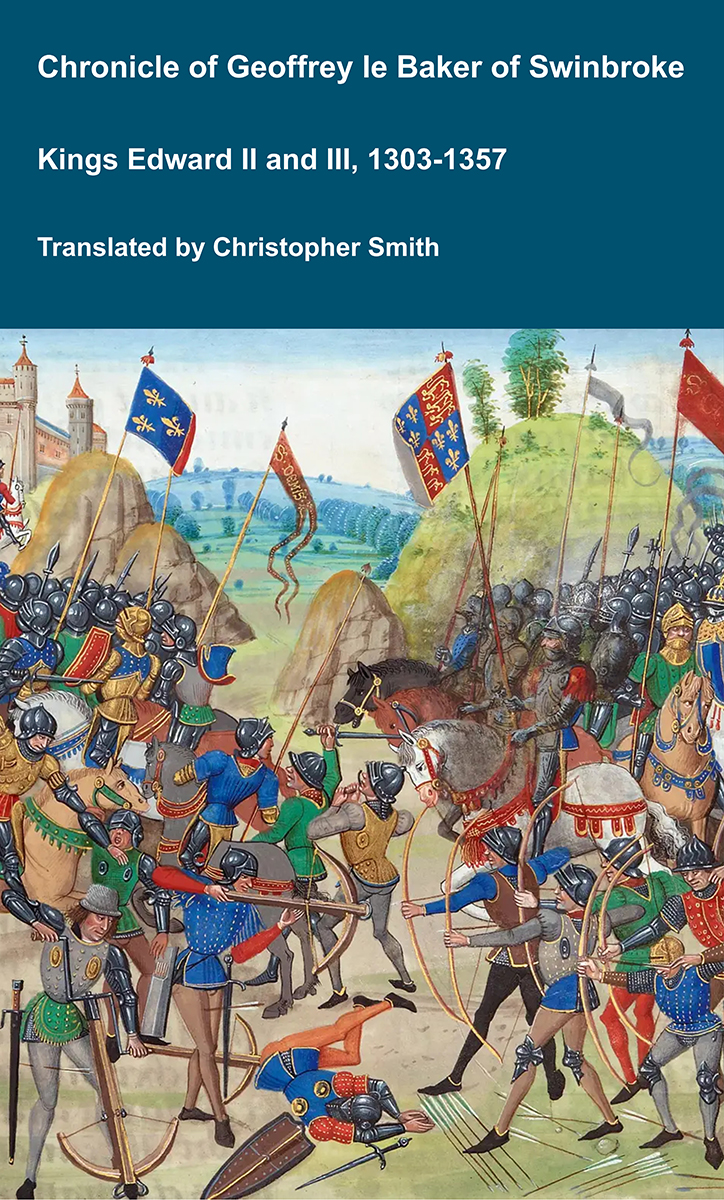
Chronicle of Geoffrey le Baker of Swinbroke
Baker was a secular clerk from Swinbroke, now Swinbrook, an Oxfordshire village two miles east of Burford. His Chronicle describes the events of the period 1303-1356: Gaveston, Bannockburn, Boroughbridge, the murder of King Edward II, the Scottish Wars, Sluys, Crécy, the Black Death, Winchelsea and Poitiers. To quote Herbert Bruce 'it possesses a vigorous and characteristic style, and its value for particular events between 1303 and 1356 has been recognised by its editor and by subsequent writers'. The book provides remarkable detail about the events it describes. Baker's text has been augmented with hundreds of notes, including extracts from other contemporary chronicles, such as the Annales Londonienses, Annales Paulini, Murimuth, Lanercost, Avesbury, Guisborough and Froissart to enrich the reader's understanding. The translation takes as its source the 'Chronicon Galfridi le Baker de Swynebroke' published in 1889, edited by Edward Maunde Thompson.
Available at Amazon in eBook and Paperback format.
On 20th June 1483 Fernando II Duke of Braganza [aged 53] was executed by John II King Portugal [aged 28] who then confiscated the assets of the House of Braganza and the family fled to Castile.
On 8th November 1483 Thomas St Leger [aged 43] was executed at Exeter Castle [Map].
On 22nd August 1485 King Richard III of England [aged 32] was killed during the Battle of Bosworth. His second cousin once removed Henry Tudor [aged 28] succeeded VII King of England.
Humphrey Cotes [aged 35] died. It isn't clear on which side he was fighting.
Those supporting Henry Tudor included:
John Blount 3rd Baron Mountjoy [aged 35].
John Cheney 1st Baron Cheyne [aged 43].
Richard Guildford [aged 35].
Walter Hungerford [aged 21].
Thomas Stanley 1st Earl of Derby [aged 50].
Edward Woodville Lord Scales [aged 29].
Edward Courtenay 1st Earl Devon [aged 26].
Rhys ap Thomas Deheubarth [aged 36].
Jasper Tudor 1st Duke Bedford [aged 53].
William Beaumont 2nd Viscount Beaumont [aged 47].
Giles Daubeney 1st Baron Daubeney [aged 34].
William Stanley [aged 50].
Roger Kynaston of Myddle and Hordley [aged 52].
Henry Marney 1st Baron Marney [aged 38].
William Brandon [aged 29] was killed.
James Harrington [aged 55] was killed.
John Howard 1st Duke of Norfolk [aged 60] was killed and attainted. He was buried firstly at Thetford Priory, Norfolk [Map] and therafter at Church of St Michael the Archangel, Framlingham [Map]. Duke Norfolk, Baron Mowbray, Baron Segrave, Baron Howard forfeit.
John Sacheverell [aged 85] was killed.
Philibert Chandee 1st Earl Bath
William Norreys [aged 44], Gilbert Talbot [aged 33], John de Vere 13th Earl of Oxford [aged 42] and John Savage [aged 41] commanded,.
Robert Poyntz [aged 35] was knighted.
Those who fought for Richard III included:
John Bourchier 6th Baron Ferrers of Groby [aged 47].
John Conyers [aged 74].
Thomas Dacre 2nd Baron Dacre Gilsland [aged 17].
William Berkeley 1st Marquess Berkeley [aged 59].
Richard Fitzhugh 6th Baron Fitzhugh [aged 28].
John Scrope 5th Baron Scrope of Bolton [aged 48].
Thomas Scrope 6th Baron Scrope of Masham [aged 26].
Henry Grey 4th or 7th Baron Grey of Codnor [aged 50].
Edmund Grey 1st Earl Kent [aged 68].
Ralph Neville 3rd Earl of Westmoreland [aged 29].
John de la Pole Earl Lincoln 1st [aged 23].
Humphrey Stafford [aged 59].
George Talbot 4th Earl of Shrewsbury [aged 17].
Thomas Howard 2nd Duke of Norfolk [aged 42] was wounded, captured and imprisoned in the Tower of London [Map] for three years. He was attainted; Earl Surrey forfeit.
Francis Lovell 1st Viscount Lovell [aged 29] fought and escaped.
John Zouche 7th Baron Zouche Harringworth [aged 26] was captured.
John Babington [aged 62], William Alington [aged 65], Robert Mortimer [aged 43], Robert Brackenbury, Richard Ratclyffe [aged 55] and Richard Bagot [aged 73] were killed
Walter Devereux Baron Ferrers of Chartley [aged 53] was killed.
William Catesby [aged 35] was executed at Leicester, Leicestershire [Map] after the battle.
George Stanley 9th Baron Strange Knockin 5th Baron Mohun Dunster [aged 25] held as a hostage by Richard III before the Battle of Bosworth.
Henry Percy 4th Earl of Northumberland [aged 36] betrayed King Richard III of England by not committing his forces at the Battle of Bosworth.
John Iwardby [aged 35] was killed.


Become a Member via our Buy Me a Coffee page to read more.
Around April 1486 the Stafford and Lovell Rebellion was an armed uprising against King Henry VII of England and Ireland [aged 29]. With the failure of the plot Francis Lovell 1st Viscount Lovell [aged 30] fled to Margaret of York Duchess of Burgundy [aged 39] in Flanders.
On 8th July 1486 brothers Humphrey Stafford [aged 60] and Thomas Stafford was executed at Tyburn [Map].
On 12th February 1499 Ralph Wulford [aged 20] was executed for having claimed to be Edward "Last Plantagenet" York 17th Earl Warwick [aged 23].
On 28th November 1499 Edward "Last Plantagenet" York 17th Earl Warwick [aged 24] was executed at Tower Hill [Map]. Earl Warwick, Baron Montagu, Baron Montagu, Baron Monthermer forfeit.
Documentation held in Spain apparently describes Catherine of Aragon's [aged 13] parents Ferdinand II King Aragon [aged 47] and Isabella Queen Castile [aged 48] expressing concern that Edward "Last Plantagenet" York 17th Earl Warwick was a potential claimant to throne, and being reluctant for their daughter to marry Arthur Prince of Wales [aged 13] whilst there was a threat to his accession causing King Henry VII of England and Ireland [aged 42] to use Perkin Warbreck's [deceased] attempted escape with Edward "Last Plantagenet" York 17th Earl Warwick as a means to an end.




On 3rd February 1537 six members of the Fitzgerald family, nephew and five uncles, Thomas "Silken" Fitzgerald 10th Earl of Kildare [aged 24], James Fitzgerald [aged 41], Oliver Fitzgerald [aged 41], Richard Fitzgerald, John Fitzgerald and Walter Fitzgerald [aged 41] were executed at Tyburn [Map].
On 10th July 1539 Adrian Fortescue [aged 63] was executed at Tower Hill [Map] for treason. He doesn't appear to have had a trial. Neither is it clear what his crime was supposed to have been. Probably dis-agreeing with Henry VIII over religion. The Order of St. John of Jerusalem has advocated devotion to Blessed Adrian as a martyr since the 17th century and Pope Leo XIII beatified him on 13th May 1895.
On 1st December 1539 Thomas Marshall aka John Beche was executed.

On 27th May 1541, after some two and a half years of imprisonment, Margaret Pole Countess Salsbury [aged 67] was executed at Tower Green, Tower of London [Map] for her role in the Exeter Conspiracy.
On 15th June 1541 John Neville of Chevet [aged 53] was executed for having failed to report a conspiracy.
On 28th June 1541 Leonard Grey 1st Viscount Grane [aged 62] was executed at the Tower of London [Map] for having allowed Gerald "Wizard Earl" Fitzgerald 11th Earl of Kildare [aged 16], his sister Elizabeth's [aged 44] son, to escape capture at Tower of London [Map].
On 5th October 1544 Richard Archer [aged 39] was executed. He was buried at St Mary Magdalene Church, Tanworth in Arden.
On 13th December 1548 John Melville of Raith was executed in Edinburgh. He appears to be have been arrested for supporting the Protestant, pro-England party in Scotland. Alternatively, or in addition, his arrest and execution was pursued by Archbishop Hamilton for Melville's involvement in the assassination of Cardinal Beaton at St Andrews. His estates were forfeited, but this forfeiture was rescinded in favour of his widow and children in 1563.
On 27th January 1550 Humphrey Arundell of Helland [aged 37] was executed.
On 1st March 1554 Anthony Knyvet [aged 37] was executed.
On 27th April 1554 Thomas Grey was executed at Tower Hill [Map]. He was buried at All Hallows by the Tower Church [Map].
On 16th March 1557 Charles Stourton 8th Baron Stourton [aged 37] and four of his servants were executed at Salisbury for the murder of William Hartgill and his son John Hartgill. His son John [aged 4] succeeded 9th Baron Stourton. See Newgate Calendar.
In 1562 John Gordon was executed during the Battle of Corrichie: Earl Huntly's Forces.

On 2nd June 1572 Thomas Howard 4th Duke of Norfolk [aged 36] was executed for his involvement in the Ridolphi Plot. He was buried at St Peter ad Vincula Church, Tower of London [Map]. Duke Norfolk, Earl Surrey, Baron Mowbray, Baron Segrave forfeit.
Henrici Quinti, Angliæ Regis, Gesta, is a first-hand account of the Agincourt Campaign, and subsequent events to his death in 1422. The author of the first part was a Chaplain in King Henry's retinue who was present from King Henry's departure at Southampton in 1415, at the siege of Harfleur, the battle of Agincourt, and the celebrations on King Henry's return to London. The second part, by another writer, relates the events that took place including the negotiations at Troye, Henry's marriage and his death in 1422.
Available at Amazon in eBook and Paperback format.
In 1578 Egremont Radclyffe was executed at Namur.

On 2nd June 1581 James Douglas 4th Earl Morton [aged 65] was executed for his part in the murder of Lord Darnley.
In 1583 James Leybourne was executed for being a "Catholic Traitor".
On 21st September 1586 Robert Gage was executed for his involvement in the Babington Plot.
In 1603 Mary Pannal was executed for witchcraft. The last person in England to be executed for witchcraft. Her maiden name may have been Tailer.
On 9th January 1606 Stephen Lyttelton [aged 31] and Robert Wintour [aged 38] were arrested at Hagley Hall, Worcestershire for their part in the Gunpowder Plot after a cook named John Finwood had informed the authorities. Stephen Lyttelton was executed sometime thereafter at Stafford.
In 1615 Robert Stewart 1st Earl Orkney [aged 82] was executed. His son Patrick succeeded 2nd Earl Orkney.
In 1628 Richard Blount of London and Williton in Somerset [aged 64] was executed at Tower Hill [Map].
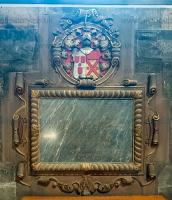
On 7th June 1650 William Hay [aged 39] was executed. He was buried in the same vault as his leader James Graham 1st Marquess Montrose [deceased] in the Moray Aisle, Edinburgh Cathedral [Map]. The
William Hay: Around 1611 he was born. Diary of John Nicoll. The tyme appoyntit for the folempnitie of his funerallis being cum, quhilk wes upone Settirday the elevint day of Maij 1661, his bones wer brocht bale agane from the Abay church to St. Geillis kirk of Edinburgh, at the bak of the tomb quhair his grandfehir wes buryed, and thair buryed him in maner following: — In the firft, the haill inhabitantes of Edinburgh, Cannogait, Potterraw, and Welt Port, being all in armour, to the number of 23 companyes, with thair difplayit baneris, gairdit the Toun of Edinburgh and Cannogait, on both fydes of the ftreit, from the kirk of Halyrudhous to the kirk of St. Geillis in Edinburgh. His Majefteis leiff gaird of hors, in the firft place, ryding alongs on thair hors bak, with thair carabines at thair fadillis, and thair drawin fwordis in thair handis, to the number of 160; nixt unto thame, 26 young boyis, all cled in murning habites from thair crounes and top of thair heidis to thair heillis, careying his airmes and uther branches of his familie; thairefter, marched up the proveft, bailleis, and counfell of Edinburgh, all in murning habites; and nixt unto thame, the burrowis and barones that wer memberis of Parliament; then came a gentillman all cled in bricht airmour on horfbak, with a trumpettour befoir him, ryding in a new fute of the Marques livray, and ane led hors behind him; thaireftir, come 18 gentill men, fum of thame careying in thair handis long baneris of honor, and utheris careying his fpures, gloves, breift and bak pece, all of airmour, on the poyntes of long ftaves; thaireftir, come ane led hors covered with his ryche broydered mantle, quhairwith he and his predicefforis wer wont to ryde at parliamentis, and his allakay richlie cled with liveray and airmes on breift and bak; then come the flour of the nobilitie all in good ordor; then the haill heraldis and purfevantis in thair koates of airmes, many of thame careying feverall honouris in thair handis; eftir thame came ane led hors all covered in blak; eftir him come the Lord Lyoun with his koat of airmes; thaireftir come many of the Marques freindis, all of thame in murning, and every ane of thame careying fum honoris in thair handis, one of thame haifand his parliament rob careying, ane uther a croun on a velwot cufcheon under a craip, and fum utheris with feverall foirtes of honores in thair handis; then come the corps and bones in a coffin, careyed under a riche paill, careyed by many honorable lordis and gentill men, with fex trumpetis all founding befoir; then came many noble ladyes cled all in murning behind the paill; eftir thame come the Erie of Middletoun, his Majelteis Commiffioner, in a koatche with fex hors, all cled in murning, and his koatche cled over in blak, none being in koatche bot himfelff, and the Lord Ramfay fitting in the bute bairheidit careying his commiffion; — the haill bellis of Edinburgh and Cannogait ringand all the tyme. Then come ten gentillmen careying each of thame in thair handis long flages, and uther peces of honor on the endis of long ftaves, befoir the bones of the Laird of Dalgatie, quhais bones wer raifed with the faid Marques from the Burrow Mure, quho wes alfo layd in the Abay kirk, as being beheadit for being in airmes with the Marques for the lait King; then nixt to these honores come two trumpettouris founding; eftir thame come the bones in a coffin, careyed by mony honorable gentillmen, with many epitaphes, and uther paynted paperis thairupone; and fo wes caryed in to the faid Yle of St. Geillis kirk, and layd on the rycht fyde of the faid noble Marques.
Become a Member via our Buy Me a Coffee page to read more.
On 23rd December 1690 John Johnston 3rd Baronet [aged 42] was executed at Tyburn [Map] for having assisted Captain James Campbell [aged 30] in the abduction and forced marriage of Mary Wharton [aged 13]. See John Evelyn's Diary.
In April 1696 John Friend Jacobite and William Parkyns [aged 47] were executed for taking part in the 1696 Plot to Assassinate King William III.
On 18th August 1746 William Boyd 4th Earl Kilmarnock [aged 41] was executed at Tower Hill [Map]. He was buried at St Peter ad Vincula Church, Tower of London [Map].
On 8th December 1746 Charles Radclyffe Earl Newburgh [aged 53] was executed at Tower Hill [Map] for his having joined the 1715 insurrection.

On 14th March 1757 Admiral John Byng [aged 52] was executed by firing squad for having been found guilty of his perceived failure to relieve the garrison at Menorca. The execution caused public outrage among fellow officers and the country at large. He was buried in the Bing Vault, All Saints Church, Southill.
Henrici Quinti, Angliæ Regis, Gesta, is a first-hand account of the Agincourt Campaign, and subsequent events to his death in 1422. The author of the first part was a Chaplain in King Henry's retinue who was present from King Henry's departure at Southampton in 1415, at the siege of Harfleur, the battle of Agincourt, and the celebrations on King Henry's return to London. The second part, by another writer, relates the events that took place including the negotiations at Troye, Henry's marriage and his death in 1422.
Available at Amazon in eBook and Paperback format.

On 4th May 1916 Joseph Plunkett [aged 28] was executed for his part in the Easter Rising. His wife, Grace Gifford [aged 28], who hed had married hours before, was woken at two am and taken back to the jail where they had their final meeting.
On 17th July 1918 Tsar Nicholas II of Russia [aged 50], his wife Alix aka Alexandra Hesse Darmstadt [aged 46] and their children Olga Holstein Gottorp Romanov [aged 22], Tatiana Holstein Gottorp Romanov [aged 21], Maria Holstein Gottorp Romanov [aged 19], Anastasia Holstein Gottorp Romanov, Alexei Holstein Gottorp Romanov were executed.
William Butler was executed.
Rebel in Cyprus was executed on the orders of his half-brother Ptolemy II Philadelphus Pharoah of Egypt 309BC 246BC.
Thomas Cheadle was executed for having killed Richard Bulkeley.