

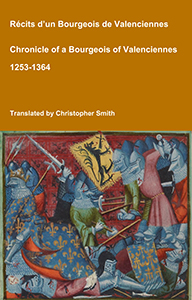
Chronicle of a Bourgeois of Valenciennes
Récits d’un bourgeois de Valenciennes aka The Chronicle of a Bourgeois of Valenciennes is a vivid 14th-century vernacular chronicle written by an anonymous urban chronicler from Valenciennes in the County of Hainaut. It survives in a manuscript that describes local and regional history from about 1253 to 1366, blending chronology, narrative episodes, and eyewitness-style accounts of political, military, and social events in medieval France, Flanders, and the Low Countries. The work begins with a chronological framework of events affecting Valenciennes and its region under rulers such as King Philip VI of France and the shifting allegiances of local nobility. It includes accounts of conflicts, sieges, diplomatic manoeuvres, and the impact of broader struggles like the Hundred Years’ War on urban life in Hainaut. Written from the perspective of a burgher (bourgeois) rather than a monastery or royal court, the chronicle offers a rare lay viewpoint on high politics and warfare, reflecting how merchants, townspeople, and civic institutions experienced the turbulence of the 13th and 14th centuries. Its narrative style combines straightforward reporting of events with moral and civic observations, making it a valuable source for readers interested in medieval urban society, regional politics, and the lived experience of war and governance in pre-modern Europe.
Available at Amazon in eBook and Paperback format.
On 24th January 1328 King Edward III of England and Philippa of Hainault were married at York Minster by Archbishop William Melton. She by marriage Queen Consort England. She was crowned the same day. She the daughter of William of Avesnes I Count Hainaut III Count Avesnes III Count Holland II Count Zeeland and Joan Valois Countess Zeeland Holland Avesnes and Hainaut. He the son of King Edward II of England and Isabella of France Queen Consort England.
The marriage was the quid pro quo for her father William of Avesnes I Count Hainaut III Count Avesnes III Count Holland II Count Zeeland having supported his mother Isabella of France Queen Consort England and Roger Mortimer 1st Earl March returning to England to usurp the throne of Edward's father King Edward II of England.
Murimuth and Avesbury. In the same year [1333] the king of England celebrated Christmas at Wallingford with the queen, who was pregnant. When the festival ended he left her at Woodstock to give birthENDNOTE 1. After the feast of the Purification of the Blessed Virgin Mary [2nd February] he himself travelled to York in order to hold a parliament there, which began on the Monday of the second week of Lent. Edward Balliol, king of Scotland, had been summoned to this parliament but did not come because of enemies lying in wait for him on islands near Scotland. Instead he sent distinguished representatives, namely Henry Beaumont, William Montagu, and certain other knights and barons.
Hoc anno tenuit rex Angliæ Natale Domini apud Walingfordiam, cum regina prægnante, et, finito festo, dimisit eam apud Wodestok ad pariendum. Et ipse, post Purificationem beatæ Mariæ, transtulit se versus Eboracum, ad tenendum parliamentum ibidem, quod die Lunæ in secunda hebdomada Quadragesimæ inchoavit. Ad quod parliamentum vocatus fuit Edwardus rex Scociæ, sed non venit propter insidias inimicorum suorum in insulis juxta Scociam latitantium; propter quod misit excusatores solempnes, scilicet dominos Henricum de Bello monte et Willelmum de Monte acuto et quosdam alios milites seu barones.
Note 1. [her mother] Philippa of Hainaut gave birth to Isabella of Woodstock on 16th June. The year of her birth is given by other sources as 1332. In 1365 she and [her future husband] Enguerrand de Coucy were married. They had two daughters, Marie and Philippa. She died in 1382.
On 16th June 1332 Isabella Countess Bedford and Soissons was born to [her father] King Edward III of England and [her mother] Philippa of Hainaut Queen Consort England at Woodstock Palace, Oxfordshire.
On 6th June 1333 William Donn Burgh 3rd Earl of Ulster was murdered by Richard de Mandeville in revenge for the murder of Richard's wife's brother Walter Liath de Burgh the year before. Earl of Ulster and Baron Burgh extinct. There is some argument that his daughter [her future sister-in-law] Elizabeth Burgh Duchess of Clarence succeeded as Countess of Ulster although her husband Lionel of Antwerp 1st Duke of Clarence appears to have been Earl of Ulster of a new creation. See Annals of Ulster.
On 19th July 1333 [her father] King Edward III of England defeated the Scots army at the Battle of Halidon Hill near Berwick-upon-Tweed, Northumberland. [her uncle] John of Eltham 1st Earl Cornwall commanded.
English archers, just as at the Battle of Dupplin Moor one year previously, had a significant impact on the massed ranks of Scottish schiltrons. Edward's army included: Thomas of Brotherton 1st Earl Norfolk, who commanded the right wing, Hugh Courtenay 1st or 9th Earl Devon, Robert Pierrepont, Hugh Courtenay 2nd or 10th Earl Devon, Henry Beaumont Earl Buchan and John Sully. One of the few English casualties was John Neville who was killed.
The Scottish army included King David II of Scotland. Alexander Bruce, Alan Stewart, James Stewart, John Stewart, William Douglas 1st Earl Atholl, Archibald Douglas who were all killed.
Hugh 4th Earl Ross was killed. William 5th Earl Ross succeeded 5th Earl Ross.
Malcolm Lennox 2nd Earl Lennox was killed. Domhnall Lennox Earl Lennox succeeded Earl Lennox.
Kenneth de Moravia Sutherland 4th Earl Sutherland was killed. William de Moravia Sutherland 5th Earl Sutherland succeeded 5th Earl Sutherland. Johanna Menteith Countess Sutherland by marriage Countess Sutherland.
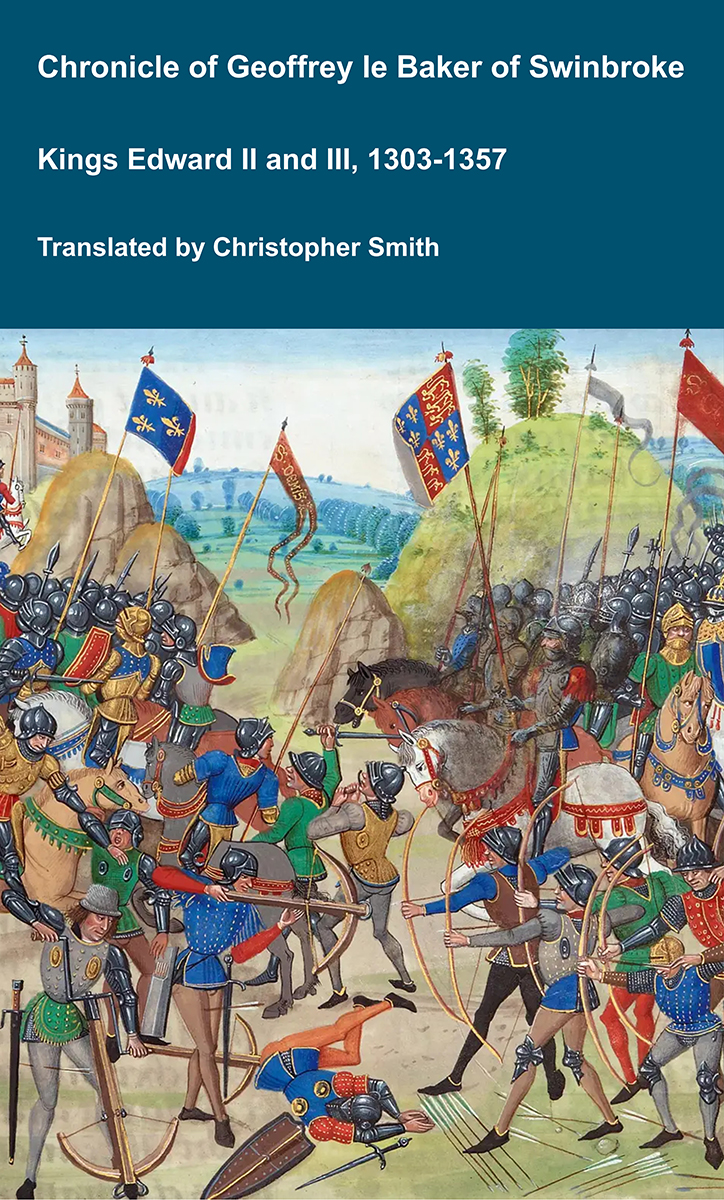 Chronicle of Geoffrey le Baker of Swinbroke. In the same year [1333], the king celebrated the feast of the Nativity of Christ at Wallingford with the queen, who was pregnant and later gave birth to their daughter Isabella at Woodstock.1 The king, having gone to York, held a parliament2 which began on the Monday in the second week of Lent. Although the King of Scotland by conquest had been invited, he did not attend, but sent formal representatives in his place, namely, the Earls Henry de Beaumont and William de Montagu, along with certain other barons and knights, who explained to the king that the said Edward, King of Scotland by conquest, could not come to his presence without great peril and resistance from the Scots still hiding out in the islands.
Eodem anno rex celebravit festum Nativitatis Christi apud Walingford cum regina pregnante, que postmodum apud Wodestok peperit filiam suam Isabellam. Rex vero, profectus Eboracum, tenuit parliamentum, die Lune in secunda ebdomada Quadragesime incoatum; ad quod rex Scocie conquestor, licet invitatus, non accessit, set misit pro ipso excusatores solempnes, scilicet Henricum de Bello monte et Willelmum de Monte acuto comites, et quosdam alios barones et milites, qui nunciarunt regi Edwardum predictum Scocie conquestorem non sine grandi periculo atque resistencia contra Scotos in insulis latitantes ad eius presenciam posse accedere.
Note 1. Other sources have Isabella being born on 16th June 1332 at Woodstock Palace.
Note 2. The parliament of York sat from the 21st February to the 2nd March 1333.
In January 1337 [her father] King Edward III of England created a number of new Earldom's probably in preparation for his forthcoming war against France...
William Montagu 1st Earl Salisbury was created 1st Earl Salisbury. Catherine Grandison Countess of Salisbury by marriage Countess Salisbury.
William Bohun 1st Earl of Northampton was created 1st Earl of Northampton. Elizabeth Badlesmere Countess Northampton by marriage Countess of Northampton.
Hugh Audley 1st Earl Gloucester was created 1st Earl Gloucester probably as compensation for his daughter Margaret Audley Countess Stafford having been abducted by Ralph Stafford 1st Earl Stafford.
Robert Ufford 1st Earl Suffolk was created 1st Earl Suffolk. Margaret Norwich Countess Suffolk by marriage Countess Suffolk.
On 17th March 1337 [her brother] Edward "Black Prince" was created 1st Duke of Cornwall.
In 1340 princesses Isabella and [her sister] Joanna, daughters of King Edward III and Queen Philippa of Hainault were left in the care of Nicholas de la Beche.
On 24th June 1340 [her father] King Edward III of England attacked the French fleet at anchor during the Battle of Sluys capturing more than 200 ships, killing around 18000 French. The English force included John Beauchamp 1st Baron Beauchamp Warwick, William Bohun 1st Earl of Northampton, Henry Scrope 1st Baron Scrope of Masham, William Latimer 4th Baron Latimer of Corby, John Lisle 2nd Baron Lisle, Ralph Stafford 1st Earl Stafford, Henry of Grosmont 1st Duke Lancaster, Walter Manny 1st Baron Manny, Hugh Despencer 1st Baron Despencer and Richard Pembridge.
Thomas Monthermer 2nd Baron Monthermer died from wounds. Margaret Monthermer Baroness Montagu 3rd Baroness Monthermer succeeded 3rd Baroness Monthermer.
On 12th May 1343 [her brother] Edward "Black Prince" was created Prince of Wales.
On 26th August 1346 the army of [her father] King Edward III of England defeated the French army at the Battle of Crécy. The English army was commanded by King Edward III of England, his son [her brother] Edward "Black Prince", Thomas Beauchamp 11th Earl Warwick, William Bohun 1st Earl of Northampton and John Beauchamp 1st Baron Beauchamp Warwick.
The English army was included: Bishop Thomas of Hatfield, Hugh Despencer 1st Baron Despencer, Bernard Brocas, Thomas Felton, James Audley, Robert Bourchier 1st Baron Bourchier, Bartholomew "The Elder" Burghesh 1st Baron Burghesh, Bartholomew "The Younger" Burghesh 2nd Baron Burghesh, Reginald Cobham 1st Baron Cobham, John Darcy 1st Baron Darcy of Knayth, Robert Ferrers 3rd Baron Ferrers of Chartley, Richard Scrope 1st Baron Scrope of Bolton, William Scrope, Stephen Scrope, William Latimer 4th Baron Latimer of Corby, John Lisle 2nd Baron Lisle, Gerard Lisle 1st Baron Lisle, Nicholas Longford, Edward Montagu 1st Baron Montagu, Walter Paveley 4th Baron Burghesh, Michael Poynings 1st Baron Poynings, Robert Ufford 1st Earl Suffolk, John de Vere 7th Earl of Oxford, Thomas West, John Willoughby 2nd Baron Willoughby, John Wingfield, Henry Percy 11th and 3rd Baron Percy, Hugh Courtenay 2nd or 10th Earl Devon (possibly), Walter "Elder" Devereux, John Devereux, Enion Sais Brecon, John Chandos, Richard Pembridge and John Sully.
The French army suffered significant casualties. King Philip "Fortunate" VI of France was wounded. William de Coucy and his son Enguerrand 6th Lord de Coucy and were killed.
Charles II Count Alençon was killed. Charles Valois Archbishop of Lyons succeeded Count Alençon.
Louis Chatillon II Count Blois I Count Chatillon was killed. Louis Chatillon III Count Blois Count Soissons succeeded III Count Blois.
Louis Dampierre II Count Nevers I Count Flanders was killed. Louis of Male III Count Nevers II Count Flanders succeeded III Count Nevers, II Count Flanders.
King John I of Bohemia was killed. Charles IV King Bohemia Holy Roman Emperor Luxemburg succeeded IV King Bohemia, Holy Roman Emperor Luxemburg. Blanche Valois Holy Roman Empress Luxemburg by marriage Holy Roman Empress Luxemburg.
Rudolph "Valiant" Metz I Duke Lorraine was killed. John Metz I Duke Lorraine succeeded I Duke Lorraine.
Jean IV de Harcourt was killed.
On 22nd February 1347 John Graham Earl Menteith was condemned to be executed as a traitor. The sentence was carried out on the 28th February 1347 when John Graham Earl Menteith was hanged, drawn and quartered by direct orders of [her father] King Edward I to whom he had previously sworn fealty.
Bourgeois de Valenciennes. It happened that while the King of England was holding the siege before Calais, Louis, Count of Flanders, by the counsel and with the consent of his good towns, came into Flanders as lord of the country. He was received on condition that he should govern and rule them according to the usages and customs of the good Count Guy, his predecessor. The great and the small did him great honour, as was fitting, and as to their rightful and true lord. He remained in the land graciously and courteously, and followed the counsel of his people and of his good towns, who instructed him in sound policies. He remained in this state from Martinmas through the winter until after Easter, when the good men of Flanders, wishing to secure the best outcome, proposed and arranged the marriage between him and the eldest daughter of the King of England, so that they might be stronger in the land. They worked so effectively that they brought him to the King of England before Calais, and all ill will was pardoned on both sides. By the will of the said count, the marriage was agreed between Count Louis of Flanders and Isabel, eldest daughter of King Edward of England, and they were betrothed without any deceit. The betrothal was performed by the Abbot of the Dunes at Bergues in Flanders, in the church of the abbey of Saint-Winoc. Present at the betrothal were the [her father] king and [her mother] queen, the Marquis of Jülich, the Earl of Warwick, the Duke of Guelders and the duchess, and many others, on the Wednesday after Mid-Lent, in the year of grace 13461. The agreements on both sides were settled, and a great feast was held. Afterwards, the Count of Flanders returned to the town of Male in Flanders. Meanwhile, while the King of England was at Bergues-Saint-Winoc, twenty ships laden with supplies came into the harbour of Calais, which greatly pleased those within the town.
Il advint qu'entandis que le roy d'Engleterre tenoit siège devant Callais, que Loys, conte de Flandres, par le conseil de ses bonnes villes et leur volenté, vint dedens Flandres, comme seigneur du pays, et fut rechups par ainsy qu'il les debvoit tenir et mener aux us et aux coustumes du bon conte Guion, son antécesseur. Sy luy firent grant honneur les grans et les petis, sycomme droit estoit, et comme à leur droiturier et vrai seigneur, et demeura au pays bellement et courtoisement, et crut le conseil de ses gens et de ses bonnes villes qui luy ensaingnoient les bons poins. Et fut en cel estât de le Saint-Martin en yver jusques après Pasques, que les bonnes gens de Flandres, pour le mieulx fait que laissiet, luy acointèrent et pourcachèrent le mariage de luy et de l'aisnée fille du roy d'Engleterre, par quoy ils fussent plus fors au pays. Et tant fisrent qu'ils l'emmenèrent au roy d'Engleterre devant Callais, et tous mautalens fussent pardonnes les ungs aux aultres, et que, par la volenté dudit conte, mariage se fist entre le conte Loys de Flandres et de Ysabel, aisnëe fille du roy Édouart d'Engleterre, et furent fianchiés sans nulle maise fraude. Sy les fiança l'abbé des Dunes à Bergues en Flandres, en l'église de l'abbaye Saint-Winoch, et furent au fianchier le roy et la royne, le marquis de Jullers, le conte de Wervich, le duc de Guéries et la ducesse et pluseurs aultres, le merquedy après le my-quaresme, l'an de grâce mil CCC et XLVI et furent les convenances de l'une partye et de l'autre prinses, et y fist-on grant feste; puis s'en râla le conte de Flandres en la ville de Malle en Flandres. Et entandis que le roy d'Engleterre estoit à Bergues-Saint-Winoch, vindrent au havre de Callais XX nefs chargies de pourvéances, dont ceulx de Callais furent moult aises.
Note 1. The betrothal of the Count of Flanders was celebrated on 13th March 1347. The marriage contract had been signed at Dunkirk ten days earlier. Edward III granted as dowry to his daughter the county of Ponthieu and the town of Montreuil, or twenty-five thousand livres in land revenue. Numerous documents relating to the negotiations that took place at that time between the King of England and the Count of Flanders have been preserved. The marriage didn't take place. He fled to France where he quickly married, on 1st July 1347, Margaret of Brabant, daughter of the French King's ally John, Duke of Brabant; see next History.
 Become a Member via our Buy Me a Coffee page to read more.
In 1351 Henry of Grosmont 1st Duke Lancaster was created 1st Duke Lancaster by [her father] King Edward III of England. Isabel Beaumont Duchess Lancaster by marriage Duchess Lancaster.
[her brother] Lionel of Antwerp 1st Duke of Clarence was created 1st Earl of Ulster.
John of Gaunt 1st Duke Lancaster was created 1st Earl Richmond.
Ralph Stafford 1st Earl Stafford was created 1st Earl Stafford.
In 1352 [her brother] Lionel of Antwerp 1st Duke of Clarence and [her sister-in-law] Elizabeth Burgh Duchess of Clarence were married. He by marriage Earl of Ulster. She was the sole heir of her father and brought the de Burgh inheritance of the lands of Ulster to the marriage. As a consequence of their earlier betrothal he had been called Earl Ulster since 1347. She the daughter of William Donn Burgh 3rd Earl of Ulster and Maud Plantagenet Countess Ulster. He the son of King Edward III of England and Philippa of Hainaut Queen Consort England.
On 19th September 1356 the army of [her brother] Edward "Black Prince" defeated the French and Scottish army led by King John "The Good" II of France at the Battle of Poitiers
King John "The Good" II of France was captured by three captains including Ivon aka John Fane.
The the English army included: Bernard Brocas, Thomas Felton, James Audley, Thomas Beauchamp 11th Earl Warwick, Bartholomew "The Younger" Burghesh 2nd Baron Burghesh, Reginald Cobham 1st Baron Cobham, Edward Despencer 1st Baron Despencer, Baron Burghesh, Ralph Ferrers, William Scrope, William Montagu 2nd Earl Salisbury, Walter Paveley 4th Baron Burghesh, Robert Ufford 1st Earl Suffolk, William Ufford 2nd Earl Suffolk, John de Vere 7th Earl of Oxford, John Willoughby 3rd Baron Willoughby, Thomas Arderne, Enion Sais Brecon, John Chandos, Richard Pembridge, Jean Grailly, Robert de Fouleshurst and John Sully
John Savile of Shelley and Golcar probably fought having received letters of protection to travel overseas.
Hugh Courtenay 2nd or 10th Earl Devon protected the baggage train.
The French and Scottish army included: King John "The Good" II of France, Philip "Bold" Valois II Duke Burgundy, Jean Bourbon I Count La Marche, Archibald "Grim" Douglas 3rd Earl Douglas, [her uncle] John "Sans Terre" Artois 1st Count of Eu; all captured.
Guichard d'Angle 1st Earl Huntingdon and William Douglas 1st Earl Douglas fought.
Peter Bourbon Duke Bourbon was killed. Louis Bourbon II Duke Bourbon succeeded II Duke Bourbon.
Gauthier VI Comte de Brienne was killed.
Become a Member via our Buy Me a Coffee page to read more.
Archaeologia Volume 35 1853 XXXIII. On the 29th, being still at Shene, Isabella is visited by [her father] Edward III., the Lady Isabella ( the King's eldest daughter ), and the Earl of March, who sup with her.
On 19th May 1359, or thereabouts, a double-royal wedding celebration took place at Reading Abbey, Berkshire whereby two children of [her father] King Edward III of England were married:
[her brother] John of Gaunt 1st Duke Lancaster and [her sister-in-law] Blanche Duchess of Lancaster were married. She by marriage Countess Richmond. She the daughter of Henry of Grosmont 1st Duke Lancaster and Isabel Beaumont Duchess Lancaster. He the son of King Edward III of England and Philippa of Hainaut Queen Consort England.
John Hastings 2nd Earl Pembroke and Margaret Plantagenet Countess of Pembroke were married. At the time John Hastings 2nd Earl Pembroke was a ward of King Edward III of England who would enjoy the benefit of the substantial revenue of the Earldom of Pembroke until John came of age nine years later in 1368. She died two or so years later probably of plague. She the daughter of King Edward III of England and Philippa of Hainaut Queen Consort England. He the son of Laurence Hastings 1st Earl Pembroke and Agnes Mortimer Countess of Pembroke.
On 13th April 1360 a freak weather event known as Black Monday Hailstorm occurred as the army of [her father] King Edward III of England were camped outside Chartres. Thomas Beauchamp 11th Earl Warwick, William Bohun 1st Earl of Northampton, Henry of Grosmont 1st Duke Lancaster, [her brother] Edward "Black Prince" and Walter Mauny were present. Around one thousand English were killed, with up to six thousand horses. King Edward III of England believed the event to be an Act of God and proceeded to negotiate with the French resulting in the Treaty of Brétigny.
On 28th April 1360 Guy Beauchamp died from injuries received during the Black Monday Hailstorm.
On 10th October 1361 [her brother] Edward "Black Prince" and [her sister-in-law] Joan "Fair Maid of Kent" Princess Wales were married at Windsor Castle. She by marriage Princess of Wales. His first wife, her second (or third depending on how you count them) husband. She had four children already. They had known each other since childhood. Thirty-one and thirty-three respectively. A curious choice for the heir to the throne; foreign princesses were usual. They were married nearly fifteen years and had two children. She the daughter of Edmund of Woodstock 1st Earl Kent and Margaret Wake Countess Kent. He the son of [her father] King Edward III of England and [her mother] Philippa of Hainaut Queen Consort England.
On 10th April 1362 Maud Plantagenet Duchess Lower Bavaria died. [her sister-in-law] Blanche Duchess of Lancaster succeeded 6th Countess of Leicester. [her brother] John of Gaunt 1st Duke Lancaster by marriage Earl of Leicester adding a fourth Earldom to the ones he already held: Earl Richmond, Earl Lancaster and Earl Derby.
On 13th November 1362, his fiftieth birthday, [her father] King Edward III of England created two sons as Dukes...
[her brother] Lionel of Antwerp 1st Duke of Clarence was created 1st Duke Clarence. [her sister-in-law] Elizabeth Burgh Duchess of Clarence by marriage Duchess Clarence.
John of Gaunt 1st Duke Lancaster was created 1st Duke Lancaster. Blanche Duchess of Lancaster by marriage Duchess Lancaster.
Around 1363 Isabella Countess Bedford and Soissons was granted custody of the paternal lands of Robert Harrington 3rd Baron Harington.
On 28th May 1363 John Harrington 2nd Baron Harington died at Gleaston Castle. Robert Harrington 3rd Baron Harington succeeded 3rd Baron Harington. Given his young age Robert Harrington 3rd Baron Harington became a ward of [her father] King Edward III of England who granted his wardship to his daughter Isabella Countess Bedford and Soissons and her husband Enguerrand de Coucy 1st Earl Bedford 1st Count Soissons.
On 27th July 1365 Enguerrand de Coucy 1st Earl Bedford 1st Count Soissons and Isabella Countess Bedford and Soissons were married at Windsor Castle. She the daughter of King Edward III of England and Philippa of Hainaut Queen Consort England.
In 1366 [her husband] Enguerrand de Coucy 1st Earl Bedford 1st Count Soissons was created 1st Earl Bedford. Isabella Countess Bedford and Soissons by marriage Countess Bedford.
In April 1366 [her daughter] Marie de Coucy Countess Soissons was born to [her husband] Enguerrand de Coucy 1st Earl Bedford 1st Count Soissons and Isabella Countess Bedford and Soissons at Coucy Castle. She married November 1384 Henry of Bar, son of Robert of Bar 1st Duke of Bar and Marie Valois Duchess Bar, and had issue.
In 1367 [her husband] Enguerrand de Coucy 1st Earl Bedford 1st Count Soissons was created 1st Count Soissons. Isabella Countess Bedford and Soissons by marriage Countess Soissons.
On 3rd April 1367 the forces of Peter "Cruel" I King Castile commanded by [her brother] Edward "Black Prince" defeated the army of Henry "Fratricide" II King Castile at the Battle of Nájera at Nájera. The English forces included John of Gaunt 1st Duke Lancaster, William Scrope, Peter Courtenay, John Devereux 1st Baron Devereux, John Savile of Shelley and Golcar, Bernard Brocas and Thomas Banastre.
The forces of Henry "Fratricide" II King Castile included Bertrand Geusclin. The battle achieved little since Bertrand Geusclin escaped.
John Ferrers 4th Baron Ferrers of Chartley was killed. Robert Ferrers 5th Baron Ferrers of Chartley succeeded 5th Baron Ferrers of Chartley. Margaret Despencer Baroness Ferrers of Chartley by marriage Baroness Ferrers of Chartley.
Edward "Black Prince" thereafter returned home, taking Peter's daughters Constance and Isabella as hostages to ensure Peter would pay the money owed to Edward. Constance married John of Gaunt 1st Duke Lancaster, Isabella married Edmund of Langley 1st Duke of York.
Before 18th April 1367 [her daughter] Philippa Guines Duchess Ireland was born to [her husband] Enguerrand de Coucy 1st Earl Bedford 1st Count Soissons and Isabella Countess Bedford and Soissons at Eltham Palace, Kent. She married (1) 5th October 1376 Robert de Vere 1st Duke Ireland, son of Thomas de Vere 8th Earl of Oxford and Maud Ufford Countess of Oxford.
In June 1368 [her brother] Lionel of Antwerp 1st Duke of Clarence and [her sister-in-law] Violante Visconti were married in the Church of Santa Maria Maggiore, Milan. The wedding festivities were lavish and ostentatious. The banquet, held outside, included 30 courses of meat and fish presented fully gilded. Between the courses the guests were given gifts such as suits of armour, bolts of cloth, war horses, arms, and hunting dogs. Among the guests were Geoffrey Chaucer, Petrarch, Jean Froissart and John Hawkwood. He the son of [her father] King Edward III of England and [her mother] Philippa of Hainaut Queen Consort England.
On 7th October 1368 [her brother] Lionel of Antwerp 1st Duke of Clarence died from poisoning at Alba. Duke Clarence extinct. [her niece] Philippa Plantagenet Countess March 2nd Countess Ulster succeeded 2nd Countess of Ulster. He was buried at the St Pietro Ciel d'Oro Church, Pavia.
There was strong speculation he had been poisoned by his [her sister-in-law] wife's father.
On 15th August 1369 [her mother] Philippa of Hainaut Queen Consort England died at Windsor Castle. Her husband [her father] King Edward III of England and youngest son [her brother] Thomas of Woodstock 1st Duke of Gloucester were present. She was given a state funeral six months later on 9th January 1370 at which she was interred at on the northeast side of the Chapel of St Edward the Confessor, Westminster Abbey. Her alabaster effigy was executed by sculptor Jean de Liège.
On 21st September 1371 John of Gaunt 1st Duke Lancaster and Constance of Castile Duchess of Lancaster were married at Roquefort, Landes. She by marriage Duchess Lancaster. His younger brother Edmund of Langley 1st Duke of York married Constance's sister in July 1372. An example of Marriage of Two Sets of Siblings. She the illegitmate daughter of Peter "Cruel" I King Castile and Maria Padilla. He the son of King Edward III of England and Philippa of Hainaut Queen Consort England.
On 11th July 1372 Edmund of Langley 1st Duke of York and Isabella of Castile Duchess York were married at Wallingford, Oxfordshire. She by marriage Countess Cambridge. She being the younger sister of Constance who had married Edmund's older brother John of Gaunt 1st Duke Lancaster a year before. An example of Marriage of Two Sets of Siblings. She the illegitmate daughter of Peter "Cruel" I King Castile and Maria Padilla. He the son of King Edward III of England and Philippa of Hainaut Queen Consort England.

On 16th January 1373 Humphrey Bohun 7th Earl Hereford 6th Earl Essex 2nd Earl of Northampton died. He was buried at Waldon Priory and Abbey. Earl Hereford, Earl Essex, Earl of Northampton extinct. His estates were divided between his two daughters [her future sister-in-law] Eleanor Bohun Duchess Gloucester, wife of [her brother] Thomas of Woodstock 1st Duke of Gloucester and Mary Bohun, wife of [her nephew] Henry of Bolingbroke, the future Henry IV, although the title and estates should have been inherited Gilbert Bohun who was a grandson of Humphrey Bohun 2nd Earl Hereford 1st Earl Essex.
In 1374 [her brother] Thomas of Woodstock 1st Duke of Gloucester and [her sister-in-law] Eleanor Bohun Duchess Gloucester were married. She the daughter of Humphrey Bohun 7th Earl Hereford 6th Earl Essex 2nd Earl of Northampton and Joan Fitzalan Countess Essex, Hereford and Northampton. He the son of [her father] King Edward III of England and [her mother] Philippa of Hainaut Queen Consort England.
On 8th June 1376 [her brother] Edward "Black Prince" died of dysentery at Westminster Palace. He was buried in Canterbury Cathedral. [her nephew] Richard succeeded as heir to his grandfather [her father] King Edward III of England who died a year later.


On 5th October 1376 [her son-in-law] Robert de Vere 1st Duke Ireland and Philippa Guines Duchess Ireland were married. She by marriage Countess of Oxford. She the daughter of Enguerrand de Coucy 1st Earl Bedford 1st Count Soissons and Isabella Countess Bedford and Soissons. He the son of Thomas de Vere 8th Earl of Oxford and Maud Ufford Countess of Oxford.
On 21st June 1377 [her father] King Edward III of England died of a stroke at Sheen Palace. He was buried in the Chapel of St Edward the Confessor, Westminster Abbey. [her nephew] King Richard II of England succeeded II King of England.
After 1380 [her husband] Enguerrand de Coucy 1st Earl Bedford 1st Count Soissons and Isabelle of Lorraine were married. She the daughter of John Metz I Duke Lorraine and Sophie Württemberg Duchess Lorraine.
On 5th October 1382 Isabella Countess Bedford and Soissons died.
On 18th February 1397 [her former husband] Enguerrand de Coucy 1st Earl Bedford 1st Count Soissons died whilst a prisoner following the Battle of Nicopolis without male issue. Earl Bedford extinct. [her daughter] Marie de Coucy Countess Soissons succeeded Countess Soissons.